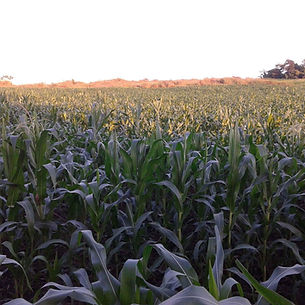

Corn on Corn Project in Ghana, Africa
Project Details
It was a 600-hectare corn-on-corn project in central Ghana. The customer requested to visit and address numerous production problems on the farm. The location was excellent for growing corn. The customer planned to expand this farm to 10,000 hectares.
The Challenges
1. There was a lack of knowledge and understanding regarding soil health, tillage practices, and basic agronomy.
2. The customer thought it was necessary to work the soil several times before planting, creating an extreme hardpan 6 inches below the surface.
3. The seed quality was very poor. In these regions, farmers commonly keep corn from the previous season for replanting.
4. Preparation and planning for the cropping season were lacking; the project manager lacked the necessary skills and foresight for a well-planned approach.
5. The project manager was more concerned about expanding before understanding how to manage the existing hectares using good agronomy practices and creating profitability.
6. Poor employee management skills: building a well-trained team of workers is imperative to the success of any project.
7. Lack of training for the staff.
8. Poor working conditions and low wages for the staff.
9. A handout mentality instead of a business profitability approach.
10. Improperly maintained equipment caused major delays in planting, spraying, and harvesting.
11. A contaminated diesel supply is causing equipment breakdowns.
12. Poor storage facilities and a lack of understanding regarding proper corn storage.
13. Rampant theft of spares and grain.


During the initial project visit, it was clear our team would face significant challenges.
While the project manager had his ideas, we knew they wouldn't work. Therefore, our first task was to teach him basic agronomy, soil fertility, plant health, seed genetics, chemical selection, nutrient management, financial management, proper planning, employee management, and crop rotation.


Our Responsibilities
Our next task was to motivate employees and train them in equipment maintenance, operation, and repair. We also needed to educate them on planting rates, chemical mixing, safe chemical handling, proper storage techniques, and many other essential on-farm functions.
After working with the project manager and employees, our next task was to inventory spare parts, the correct equipment for the job, and all equipment settings for proper operation. No one had properly adjusted or maintained the planters in the previous four years. We thoroughly reviewed the planter and made all the necessary adjustments. We also had to calibrate the sprayers and set the harvester because they had never been set properly since their arrival.


After addressing these challenges, the next step was to tackle the severe soil compaction and nutrient deficiency. Showing the project manager the compacted and nutrient-deficient soil revealed the extent of the poor equipment selection and management techniques used previously. Given management's rudimentary understanding, it was time to implement soil improvement techniques.
In preparation for planting, we created a crop plan, an agronomy plan, and a schedule for the first season. Again, we used basic, easy instructions, allowing us to develop their understanding as we slowly improved and tweaked the processes to fit the employees' skill set for this project.


Lastly, we addressed storage and logistics. We needed to teach them the importance of aeration for this region and design temporary storage capable of handling the extreme heat here.
It is not uncommon to enter a project and find multiple issues with owners and project managers who commonly think farming is nothing more than planting seed, waiting for it to grow, and then collecting profits.


Successes
While this project wouldn't rank among our top successes, we overcame several small and major hurdles.
-
The employees were eager to learn and adapted the new ideas and approaches we taught them very quickly.
-
Soil compaction slowly began to resolve, nutrient levels returned to optimum ranges for corn production, and temporary storage was implemented.
-
Root development improved dramatically, and the plants were much healthier by the end of the project.


Conclusion
As our time with this project neared its end, it was apparent the project manager focused more on securing funds to build the largest farm possible than on understanding farm fundamentals and achieving profitability. At times you will encounter project managers or owners who prioritize their community standing over their employees or profitability.
It is imperative to know the goals of the owners and project managers. Knowing this will help you evaluate the situation better. Typically, consultants are called in when problems exist in the system. Identify these quickly to know where to focus your attention for the project's future success.
The on-farm workers, who could barely read and write English, learned those skills over the years, along with proper equipment maintenance, GPS operation, crop storage, and basic agronomy.
Building a team, empowering employees to achieve their best, and profitably growing quality grains are some of the most rewarding parts of consulting on the project.